الجزیره فارسی
روایت خاورمیانه
الجزیره فارسی
روایت خاورمیانه 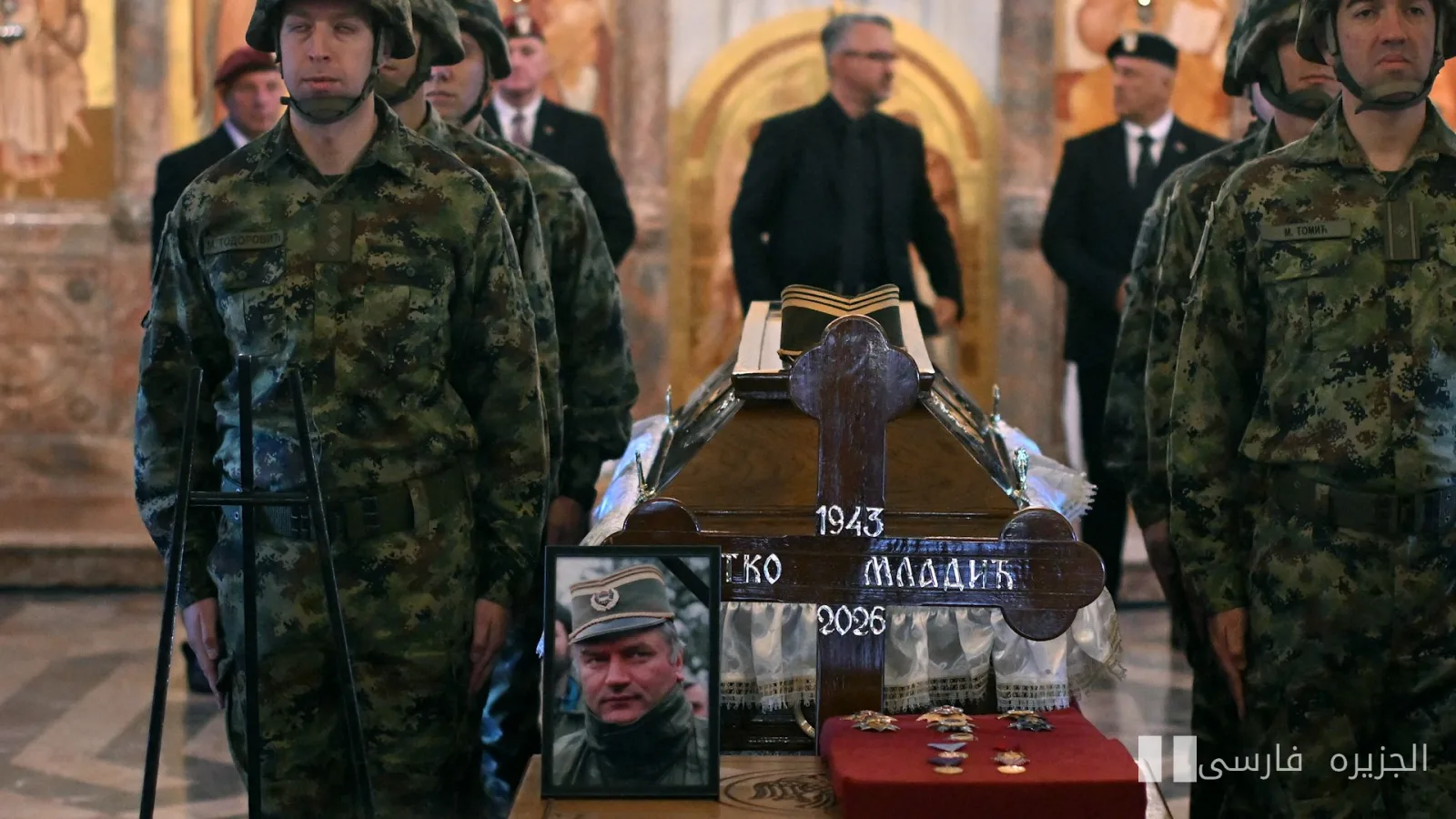
Yesterday, Belgrade, the capital of Serbia, witnessed a controversial funeral ceremony for Ratko Mladić, the convicted war criminal. This ceremony, held with state honors, has once again raised many questions about the Serbian society's assessment of the history of the Balkan wars and its effects on the national identity of the country.
Celebration or Condemnation?
Ratko Mladić, known as one of the controversial figures of the Yugoslav wars, was tried and sentenced to life imprisonment for his role in the genocides and war crimes in Bosnia and Herzegovina. However, his funeral became a sort of celebration of a contentious figure. Many attendees at the ceremony presented him as a national hero, while another group strongly condemned this approach.
Thousands of people attended the ceremony, some of whom carried Serbian flags and images of Mladić. This image, on one hand, reflects the support of part of Serbian society for Mladić, and on the other hand, points to the deep social and political challenges present in the country. While the Serbian government officially reflects on its history, a portion of the population still takes pride in their national heroes, even if that pride is associated with war crimes.
Consequences and Reactions
The holding of this ceremony elicited varied reactions at the international level. Human rights groups and international organizations regarded this ceremony as a sign of denial and rejection of past crimes. They warned that such approaches could lead to the continuation of social and political tensions in the region.
Ultimately, the funeral of Ratko Mladić will remain not only as a historical event but also as a sign of the deep contradictions in Serbian society and the Balkan region. Can this country move towards reconciliation and acceptance of the past, or will it remain trapped in denial and conflict?